Introductory violin course with no foundation!
Online violin programs typically provide structured lessons that cover a range of topics, from basic techniques to more advanced skills. By the end of the program, you should have developed your violin playing skills significantly.
Online violin programs can be more cost-effective compared to traditional in-person lessons since they often offer a range of materials and resources at a lower price.Depending on the program, you may have access to a variety of instructors with different teaching styles and expertise, allowing you to choose an approach that suits your learning preferences.
 violinonline
What are advanced positions?Advanced positions are positions on the violin that are higher than first position. They are used to play notes that are too high to reach in first position. There are seven regular advanced positions, from second position to eighth position.
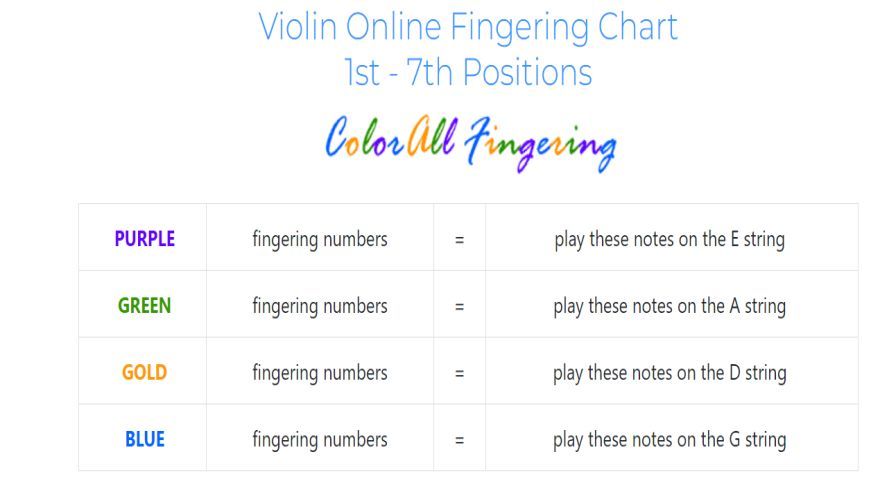
There are a few different ways to learn advanced positions. One way is to take lessons from a qualified violin teacher. Another way is to use online resources, such as the Violin Online Advanced Fingering Chart. The chart is easy to use. Simply find the note you want to play on the chart and look up the fingering for that note. The chart also includes a diagram of the violin fingerboard, so you can see where to place your fingers.
 Recommended for
- understanding of the basic fingerings.
- If you are having trouble finding a particular note, you can use the chart to help you.
 violinonline
The Violin Fingering Chart on the site violinonline is here to help you navigate this exciting journey.The Violin Fingering Chart is a visual representation of the finger positions on the violin's four strings: G, D, A, and E. It serves as a valuable reference tool for violinists of all levels, from beginners to advanced players.
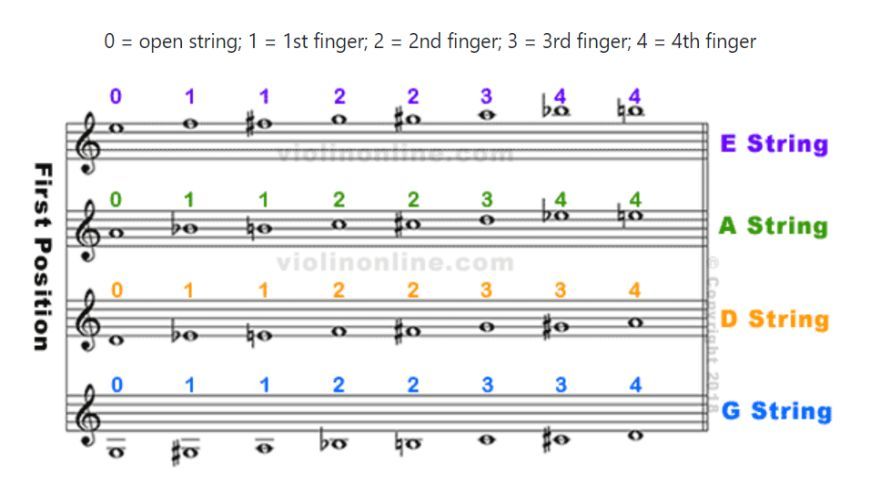
Using the Violin Fingering Chart, you can learn how to play specific melodies, scales, and exercises. It's a fantastic tool for reinforcing your understanding of finger placement and building muscle memory. Remember, learning the violin requires patience and consistent practice. Start with the basics and gradually work your way up to more complex pieces. The violin can be challenging, but with dedication and the guidance provided by resources like the Violin Fingering Chart on violinonline, you'll be well on your way to becoming a skilled violinist. Happy playing!
Recommended for
- For those who are new to the violin, the chart is an excellent starting point. It introduces the basics of finger placement on the four strings and helps beginners understand where to place their fingers to produce specific notes. Learning the initial finger positions is crucial for building a strong foundation in violin playing.
- Even experienced violinists can benefit from the Violin Fingering Chart. It serves as a quick reference for fingerings in challenging passages or unfamiliar keys. Advanced players might use the chart to practice new techniques, improve shifting, and explore various fingerings for ornamentations and advanced musical passages.
 violinonline
Introducing violin bow strokes is an essential aspect of learning to play the violin. On violinonline, we offer comprehensive tutorials and resources to help you understand and master various bowing techniques.
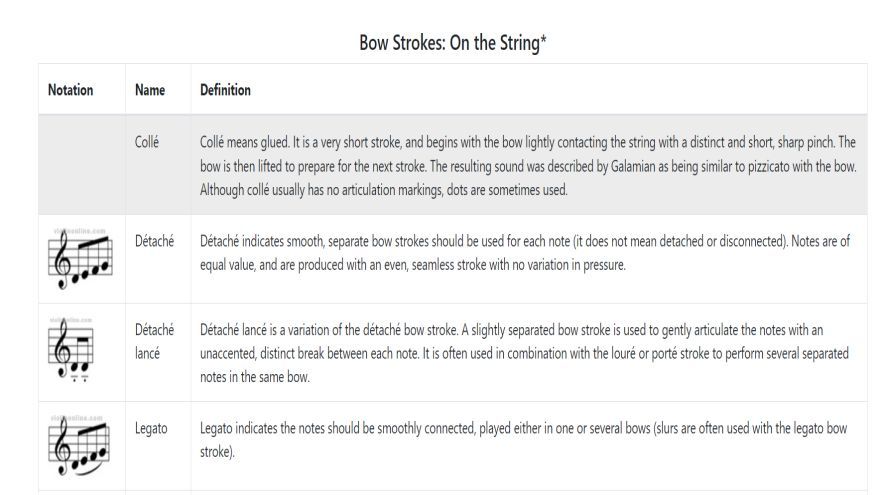
Violin bowing methods include Full Bow Delivery: This involves using the entire length of the bow to create a smooth and even sound. This is the basic bowing method used in various musical passages.Down-bow and up-bow: Learning to down-bow (pulling the bow away from the violin) and up-bow (pushing the bow towards the violin) is the foundation of bowing technique. Continuous bowing: In continuous bowing, you try to make the sound smooth and coherent, avoiding any gaps or breaks between notes. At violinonline, we offer step-by-step video tutorials, interactive exercises, and sheet music to help you develop your bowing techniques and musical expression. Whether you're a beginner or an advanced player, our platform is designed to support your violin journey and help you become a skilled and expressive violinist. Happy practicing!
Recommended for
- Learn how to carry a violin bow.
- Sul Tasto and Sul Ponticello: These techniques involve playing over the fingerboard (sul tasto) or near the bridge (sul ponticello) to produce specific timbres.